Introduction
Every parent wants to give their child the best possible start in life. During the first six years, a child’s brain develops faster than at any other stage of life, creating millions of neural connections that form the foundation for future learning, behavior, emotional well-being, and success.
One question many parents ask is:
“Should my child spend more time learning academics or playing?”
Modern research in Early Childhood Education provides a clear answer: children learn best through play.
Play is not simply entertainment. It is one of the most powerful tools for brain development. Through play, children explore, experiment, solve problems, communicate, build relationships, and make sense of the world around them.
At The Pride and Joy Preschool, we believe that meaningful play is meaningful learning. This article explores how play-based learning supports early brain development and why it remains one of the most effective educational approaches in 2026.
What is Play-Based Learning?
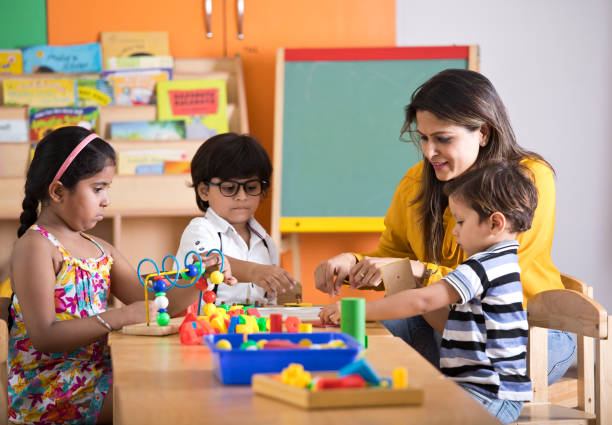
Play-based learning is an educational approach where children learn through hands-on experiences, exploration, creativity, and purposeful play.
Unlike traditional rote-learning methods, play-based learning encourages children to actively participate in their learning journey.
Examples include:
- Building blocks and construction activities
- Pretend play and role-playing
- Storytelling and dramatic play
- Art and craft projects
- Sensory activities
- Outdoor exploration
- Music and movement
- Nature-based learning
- STEM activities for preschoolers
The goal is not simply to keep children occupied but to create opportunities for meaningful learning through enjoyable experiences.
Why Early Brain Development Matters
The first five years of life are often referred to as the “golden years” of development.
According to child development experts, nearly 90% of brain development occurs before the age of five.
During this period, children’s brains are constantly creating and strengthening neural pathways responsible for:
- Language development
- Memory
- Attention
- Problem-solving
- Emotional regulation
- Social skills
- Creativity
- Executive functioning
The experiences children have during these years significantly influence how these brain connections develop.
Positive, engaging, and stimulating environments help strengthen these pathways, while limited opportunities for exploration may restrict developmental growth.
This is where play-based learning becomes incredibly valuable.
How Play Builds Neural Connections
Every time a child engages in play, their brain is actively processing information.
For example:
When children build a tower using blocks, they are:
- Learning balance and spatial awareness
- Testing hypotheses
- Solving problems
- Developing fine motor skills
- Improving concentration
These activities activate multiple regions of the brain simultaneously, strengthening neural connections.
The more children engage in meaningful play experiences, the stronger these connections become.
Play literally helps build the architecture of the developing brain.
1. Play Enhances Cognitive Development
Cognitive development refers to how children think, learn, reason, remember, and solve problems.
Play-based learning encourages children to:
Explore Cause and Effect
Children learn:
- What happens when blocks fall
- How water flows
- Which objects float or sink
Develop Problem-Solving Skills
Children constantly encounter challenges during play.
Examples include:
- Completing puzzles
- Constructing structures
- Navigating obstacle courses
Improve Memory and Attention
Games that involve rules, sequencing, and storytelling strengthen working memory and concentration.
These experiences help children develop critical thinking skills that support future academic success.
2. Play Strengthens Language and Communication Skills
Language development is one of the most important milestones during early childhood.
Play naturally creates opportunities for communication.
Pretend Play
When children pretend to be doctors, chefs, shopkeepers, or teachers, they:
- Expand vocabulary
- Practice conversation
- Develop storytelling abilities
- Learn sentence structure
Group Activities
Collaborative play encourages children to:
- Express ideas
- Ask questions
- Listen actively
- Negotiate solutions
Children learn language most effectively when it is connected to meaningful experiences rather than memorization.
3. Play Supports Social and Emotional Development
Academic skills alone do not determine future success.
Social and emotional competencies are equally important.
Play-based learning helps children develop:
Empathy
Children learn to understand different perspectives through role-playing and cooperative activities.
Self-Regulation
Games often require children to:
- Wait for their turn
- Follow rules
- Manage emotions
Confidence
Successfully completing challenges boosts self-esteem and encourages independence.
Friendship Skills
Play teaches:
- Sharing
- Cooperation
- Communication
- Conflict resolution
These social-emotional skills support lifelong learning and healthy relationships.
4. Play Encourages Creativity and Imagination
Creativity is considered one of the most valuable future-ready skills.
Through open-ended play, children learn to:
- Generate ideas
- Think flexibly
- Experiment with possibilities
- Express themselves confidently
For example:
A cardboard box may become:
- A spaceship
- A castle
- A train
- A house
Imaginative play strengthens divergent thinking, which is essential for innovation and problem-solving.
5. Play Improves Executive Function Skills
Executive functions are the brain’s management system.
These skills include:
- Planning
- Decision-making
- Attention control
- Memory
- Self-regulation
Research consistently shows that play-based learning supports executive function development.
Activities such as:
- Building projects
- Strategy games
- Group challenges
require children to think ahead, adapt, and make decisions.
Strong executive functioning predicts future academic achievement more accurately than early academic instruction alone.
6. Play Supports Physical Brain Development
Physical movement plays a critical role in healthy brain development.
Active play strengthens the connection between the brain and body.
Examples include:
Gross Motor Activities
- Running
- Jumping
- Climbing
- Balancing
Fine Motor Activities
- Drawing
- Cutting
- Threading beads
- Building with blocks
These experiences improve coordination while supporting neural growth and sensory integration.
7. Play Reduces Stress and Supports Emotional Well-Being
Children experience stress just like adults.
Play provides a safe outlet for:
- Emotional expression
- Self-discovery
- Relaxation
- Processing experiences
When children play, their brains release positive chemicals that promote learning and emotional well-being.
A relaxed and emotionally secure child is more receptive to learning and exploration.
Why Play-Based Learning is More Effective Than Early Academic Pressure
Many parents worry that too much play may delay academic learning.
In reality, the opposite is often true.
Children who develop strong foundations through play frequently demonstrate:
- Better language skills
- Improved literacy readiness
- Stronger problem-solving abilities
- Greater creativity
- Higher motivation to learn
Play prepares the brain for formal learning by developing the underlying skills required for academic success.
Rather than rushing academics, effective preschools focus on building the developmental foundations that make future learning easier and more meaningful.
What Play-Based Learning Looks Like in a Modern Preschool
A high-quality preschool does not simply allow children to play freely all day.
Instead, educators intentionally design learning experiences around developmental goals.
Examples include:
Literacy Through Play
- Storytelling corners
- Puppet activities
- Interactive reading
Mathematics Through Play
- Sorting activities
- Counting games
- Pattern recognition
Science Through Exploration
- Nature walks
- Water experiments
- Sensory discovery
Social Learning Through Group Activities
- Team games
- Collaborative projects
- Role-play scenarios
Every activity is carefully planned to support growth across multiple developmental domains.
The Role of Teachers in Play-Based Learning
Teachers play a vital role in maximizing the benefits of play.
Effective educators:
- Observe children’s interests
- Ask open-ended questions
- Encourage exploration
- Introduce new challenges
- Facilitate meaningful interactions
Rather than directing every activity, teachers act as guides who support children’s natural curiosity and learning.
This approach creates a rich and engaging learning environment.
How Parents Can Encourage Play-Based Learning at Home
Parents can support brain development through simple everyday activities.
Consider:
Reading Together
Storytelling strengthens language and imagination.
Open-Ended Toys
Blocks, art materials, and pretend-play items encourage creativity.
Outdoor Exploration
Nature experiences stimulate curiosity and sensory learning.
Family Games
Board games support memory, attention, and problem-solving.
Limiting Passive Screen Time
Children learn best through active engagement rather than passive consumption.
Simple, meaningful interactions often provide the greatest developmental benefits.
How The Pride and Joy Preschool Uses Play-Based Learning
At The Pride and Joy Preschool, we believe children learn best when they are actively engaged, curious, and joyful.
Our play-based approach focuses on:
- Cognitive development
- Language enrichment
- Social-emotional growth
- Creativity and imagination
- Physical well-being
- Problem-solving skills
- Future-ready competencies
Through thoughtfully designed learning experiences, we help children build the strong developmental foundation they need for lifelong success.
Every activity is guided by our commitment to nurturing confident, curious, and capable learners.
Conclusion
Play is not a break from learning—it is learning.
The early years represent a remarkable window of opportunity for brain development, and play-based learning provides the ideal environment for children to grow intellectually, socially, emotionally, and physically.
By encouraging exploration, creativity, communication, and problem-solving, play strengthens the neural pathways that support future learning and development.
As parents, choosing a preschool that values purposeful play can be one of the most important investments you make in your child’s future.
When children learn through play, they develop not only academic readiness but also confidence, resilience, curiosity, and a lifelong love for learning.
Frequently Asked Questions (FAQs)
What is play-based learning?
Play-based learning is an educational approach where children learn through hands-on experiences, exploration, creativity, and purposeful play activities.
How does play help brain development?
Play strengthens neural connections, supports cognitive growth, enhances language skills, improves emotional regulation, and develops problem-solving abilities.
Is play-based learning suitable for school readiness?
Yes. Research shows that play-based learning builds the foundational skills children need for literacy, numeracy, communication, and critical thinking.
Can children learn academics through play?
Absolutely. Concepts such as counting, phonics, science, and problem-solving can be taught effectively through engaging play experiences.
Why is play important in preschool education?
Play supports holistic development by nurturing cognitive, social, emotional, physical, and creative skills during the most critical years of brain growth.